
In line with the expectations of the Reserve Bank of India and the Union government, inflation dropped to 5.8 per cent after remaining over 6.0 per cent in the recent period
Inflation rose for the seventh consecutive week by 0.12 per cent to reach 31-week high of 5.75 per cent for the week ended December 27, mainly due to an all round hike in the prices of primary articles, fuels and manufactured items.
Inflation fell for the tenth consecutive week to 5.01 per cent in the week ended February 5, touching the lowest level after the UPA came into power, due to cheaper vegetables, fruits and edible oils.
The inflation rate slipped to 4.96 per cent during the week ended October 25 due to decline in prices of food items like wheat, jowar, bajra, maize, tea, vegetables and fruits.
Costlier foods, electricity and manufactured products pushed up inflation to 4.47 per cent for the week ended March 27, but 2003-04 ended on a positive note with the price level being contained at 4-4.5 per cent.
Inflation increased to 3.11 per cent for the week ended November 3, compared to 2.97 per cent a week ago, mainly due to rise in prices of food items, petroleum products and manufactured articles.
The wholesale prices-based inflation rose by 0.21 per cent at 4.82 per cent during the week ended August 5, as against 4.61 per cent for the previous week, with some manufactured products along with aviation turbine fuel becoming costlier.
Declining inflation may present a case for further monetary policy easing.
The wholesale price-based index stood at 5.27 per cent in the corresponding week a year ago.
Food inflation, as measured by the Wholesale Price Index, stood at 9.13 per cent during the previous week.

The Wholesale Price Index-based inflation fell to 4.7 per cent in May, driven mainly by decline in prices of manufactured items, even as prices of food articles inched up.

Central pool of onions to be set up; offences under Essential Commodities Act to be made non-bailable.

The WPI inflation for September rose to 7.81 per cent, from 7.55 per cent in August.
Wholesale prices based inflation rate rose by 0.26 per cent to stand at 4.28 per cent during the week ended March 11
The reading for March WPI inflation was revised to 6% from 5.7% earlier.

Policymakers have been grappling with high prices for food staples such as onions and potatoes even after the central bank raised interest rates by a quarter percentage point in each of its previous two reviews.

Food inflation, as measured by the Wholesale Price Index, stood at 9.01 per cent in the previous week, while it was over 21 per cent in the first week of June last year.
The Reserve Bank may give up its opposition to the proposal of a monthly compilation and release of inflation data, with D Subbarao moving to the central bank from the finance ministry, which was open to the idea of a shift in the time table of the Wholesale Price Index.
Inflation dipped to a two-month low of 5.20 per cent during the week ended May 28 from the previous week's level of 5.38 per cent even as some of the primary and manufactured products became costlier.
Food inflation was recorded at 9.23 per cent in September.

Inflation may touch the six per cent-mark by the end of this fiscal due to surging food prices and decline in agricultural output, research firm Dun & Bradstreet said.
Food inflation surged to a four-and-a-half month high of 9.90 per cent during the week ended July 30 on the back of costlier onions, fruits, vegetables and protein-based items.
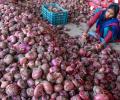
The Reserve Bank of India on Thursday raised its inflation projection to 5.1-4.7 per cent for the second half of the current fiscal on the back of spike in prices of vegetables such as onion and tomatoes.
Continuing its fall for the third consecutive week, inflation dipped to 6.73 per cent for the week ended December 11, mainly due to cheaper vegetables and fuels, after remaining over 7 per cent since July.
Reserve Bank of India Deputy Governor Rakesh Mohan said on Friday that he expected inflation to be stable and saw no pressures apart from oil prices. \n\n\n\n
Inflation drastically fell to a two-decade low of 0.44 per cent in the first week of March as food and fuel items turned cheaper, prompting analysts to say that rate of price rise would soon turn negative.

The rise in inflation based on wholesale prices in October from 9.72 per cent in September was mainly on account of higher prices of fruits and vegetables, manufactured goods and petrol.
Inflation further eased to 3.23 per cent for the week ended September 15, compared to 3.32 per cent for the previous week, mainly due to fall in prices of fruits and vegetables, pulses, milk and some manufactured items.
Inflation remained unchanged at the previous week's level of 4.27 per cent for the week ended July 7, despite a fall in prices of fruit and vegetables, poultry chicken, moong and masur, and some manufactured items.
Inflation eased to 0.18 per cent, the lowest ever in the last three decades, even as prices of food articles like pulses, cereals and vegetable hardened during the week ended April 4.
Inflation declined to 0.26 per cent, the lowest ever in more than three decades, for the week ended March 28 mainly on account of food items and mineral products, fuelling expectations of rate cuts by the Reserve Bank.
Inflation further eased to 4.80 per cent for the week ended June 2 as compared to 4.85 per cent in the previous week, mainly due to decline in food prices and some fuel and manufactured items.
Inflation rose marginally to 3.75 per cent during week ended September 17 from 3.53 per cent a week ago, mainly due to increase in the prices of minerals, manufactured products and non-food essential items.

The country saw two straight years of deficient monsoons.
Increasing prices of commodities, notably diesel and petrol, pushed up inflation to a 35-week high of 6.09 per cent in the first week of the fourth quarter this fiscal as compared to 3.78 per cent in the year-ago period.

The bank is due to review the monetary policy on July 30.
The overall inflation went up marginally to 5.25 per cent for the week ended November 29 despite a sharp 9 per cent fall in vegetable prices.
Overall the inflation in vegetable segment was 8.57 per cent as compared to about 4 per cent in February.
Inflation shed another 0.12 per cent to tick eight months' low of 5.25 per cent for the week ended January 29, despite costlier fruits and vegetables.
Food inflation, as measured by the Wholesale Price Index, stood at 6.6 per cent in the previous week.
 © 2026 Rediff.com - Advertise with us - Disclaimer - Privacy Policy - Sitemap - Feedback - About us - Terms of use - Grievances